Cartilage vs. Helix Piercings- What's the Difference?

What is a Cartilage Piercing?
When exploring types of ear piercings, it’s common to hear terms like “cartilage” and “helix” used interchangeably—but there’s a small, important distinction. Cartilage refers to the firmer parts of your ear. It includes several piercing locations, such as the helix, conch, tragus, rook, and more. If you’re considering one of these options, booking with professional piercers ensures you get expert guidance and a safe, professional experience.
What is the Helix?
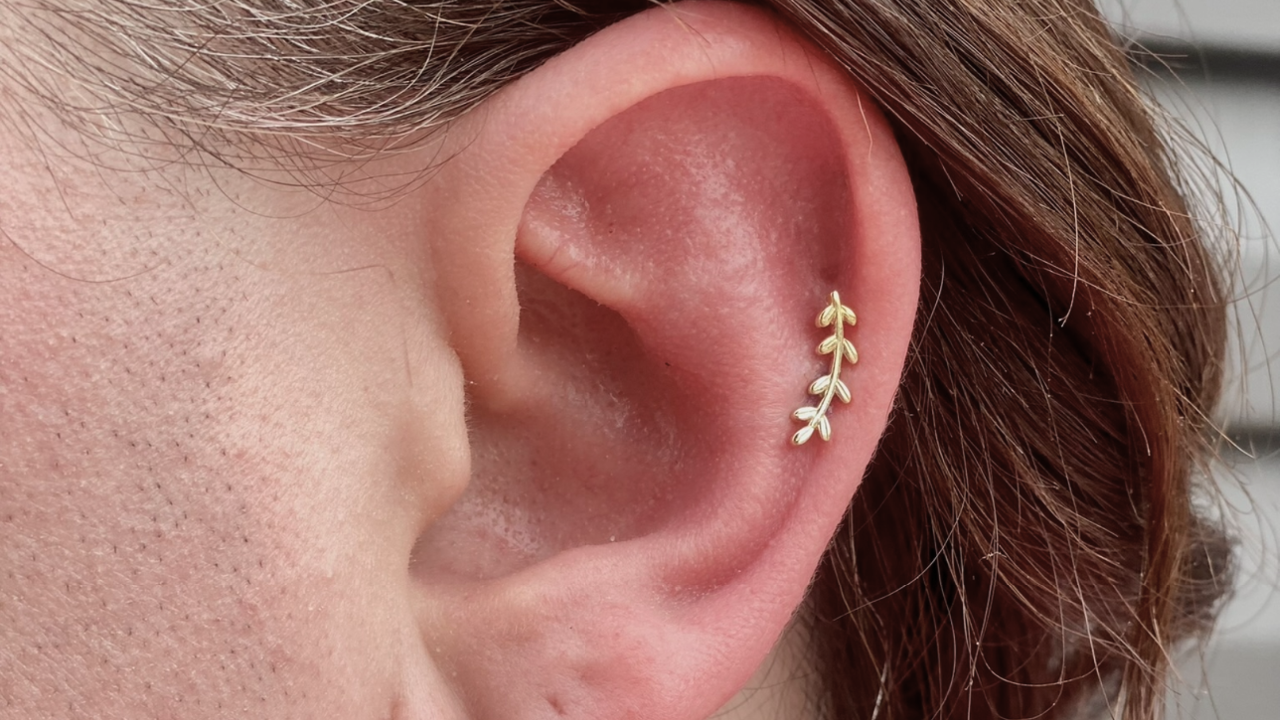
The helix is a specific spot within the broader category of cartilage piercings. The helix is located along the outer edge of the ear and is one of the most popular placements.
Beyond the Ear
Other piercing placements involve cartilage, too! The nostril is also made up of soft cartilage, not just skin. While it's thinner and more flexible than ear cartilage, it’s still firmer than fleshier areas like the earlobe or navel.
Healing
Healing a cartilage piercing is a different experience compared to piercings that go through softer tissue. Cartilage has less blood flow, which means it generally takes longer to heal. You might be looking at several months, sometimes even up to a year, for a complete heal. Softer tissue piercings often heal more quickly and with fewer complications, thanks to better circulation. This difference is key when planning your aftercare and managing expectations. If a piercing closes up, deciding between reopening the same hole or opting for a fresh piercing is a common concern. You can find a detailed explanation of both approaches in our comparison of re-opening versus re-piercing.
So, What's the Difference?
It’s easy to see why the terms “cartilage” and “helix” get used interchangeably—they’re closely related, but not the same. “Cartilage” refers to the firm, flexible tissue found in various parts of the ear and nose, and a cartilage piercing is any piercing that passes through this tissue. The helix, on the other hand, is a specific area along the outer upper edge of the ear. So while every helix piercing is technically a cartilage piercing, not all cartilage piercings are helix piercings. Understanding this distinction can help you better communicate with your piercer and choose a placement that fits your style.
FAQs
Q: Does helix piercing hurt more than lobe piercing?
A: Yes, helix piercing usually hurts more than a lobe piercing because the helix goes through cartilage, which is firmer than soft earlobe tissue. The pain is typically quick and sharp rather than long-lasting, but the healing process can feel more noticeable because cartilage is more sensitive to pressure and irritation.
Q: How long does a helix or cartilage piercing take to heal?
A: A helix or cartilage piercing typically takes about 6 to 12 months to fully heal. Even if it looks healed on the outside, the tissue inside may still be recovering, so it is important to follow aftercare instructions and avoid irritation
Q: Why is my helix piercing still sore after a few months?
A: It is common for a helix piercing to stay sore for a few months because cartilage heals slowly and can be easily aggravated by pressure, snagging, sleeping on it, or jewelry movement. If it keeps getting bumped or pressed, the soreness can last much longer than expected.
Q: Can I sleep on a new helix piercing?
A: It is best not to sleep on a new helix piercing, especially during the first several months. Constant pressure from sleeping is one of the biggest reasons cartilage piercings stay irritated or heal more slowly.
Q: Can I wear headphones with helix piercing?
A: You can wear headphones with caution, but over-ear headphones may press on the piercing and cause discomfort. If possible, avoid anything that puts pressure on the area until the piercing has healed more fully.
Q: Should I start a helix piercing with a hoop or a stud?
A: A stud is usually the better starter option for a new helix piercing because it is less likely to move, snag, or irritate the piercing while it heals. Hoops can create more motion and pressure, which can make healing harder in the early stages.